Best Frenemies Forever: Inside Hollywood's Thriving Fake Beef Industrial Complex

Best Frenemies Forever: Inside Hollywood's Thriving Fake Beef Industrial Complex
Picture the scene: two of Hollywood's biggest names are apparently locked in a simmering feud. Tabloids are running breathless 'inside sources' pieces. Twitter — sorry, X — is splitting into camps. Think pieces are being written. Sides are being chosen. And somewhere, in a very nice restaurant that neither party is paying for, their publicists are having a perfectly pleasant lunch and making sure the story stays alive for exactly as long as it needs to.
Welcome to the Fake Feud Factory. Population: more celebrities than you'd think, and approximately zero of them are going to admit it.
How a Feud Gets Built From Scratch
The anatomy of a manufactured celebrity beef is, once you see it, almost impossible to unsee. It typically starts small — a vague comment in an interview that can be read two ways, a social media post that might be directed at someone specific, or the classic 'a source close to [Celebrity A] says she was hurt by [Celebrity B]'s comments' item placed in a friendly tabloid. None of it is explicit enough to be denied cleanly. All of it is specific enough to generate clicks.
From there, the story feeds itself. Fan accounts amplify. Counter-sources emerge. The second celebrity's team drops a 'she has nothing but respect for her colleague' non-denial that somehow makes things worse. Someone digs up a three-year-old interview quote that can be recontextualized as shade. A body language expert is consulted. An entire ecosystem of content is born from approximately nothing.
The key players in this machine are rarely the celebrities themselves. It's the publicists who know exactly which journalists to call, the social media managers who understand that a slightly ambiguous Story will generate ten times the engagement of a direct statement, and the tabloid editors who have been playing this game long enough to know a planted item when it lands in their inbox — and who run it anyway because their readers love it.
The Historical Record Is Damning
The evidence for manufactured feuds is hiding in plain sight, and it has been for decades. The supposed Mariah Carey and Jennifer Lopez rivalry — years of pointed non-mentions, loaded comments, and fan warfare — has been complicated by the fact that people who have worked with both report they've always been cordial in professional settings. The beef existed primarily in the space between what was said and what was implied.
 Photo: Mariah Carey, via sp-ao.shortpixel.ai
The Nicki Minaj and Cardi B situation, which famously escalated to a shoe being thrown at a New York Fashion Week party in 2018, was preceded by months of escalating subliminal posts and 'sources say' items that both camps had ample opportunity to shut down — and didn't. By the time the shoe flew, the story had generated enough press coverage to sustain a small newspaper.
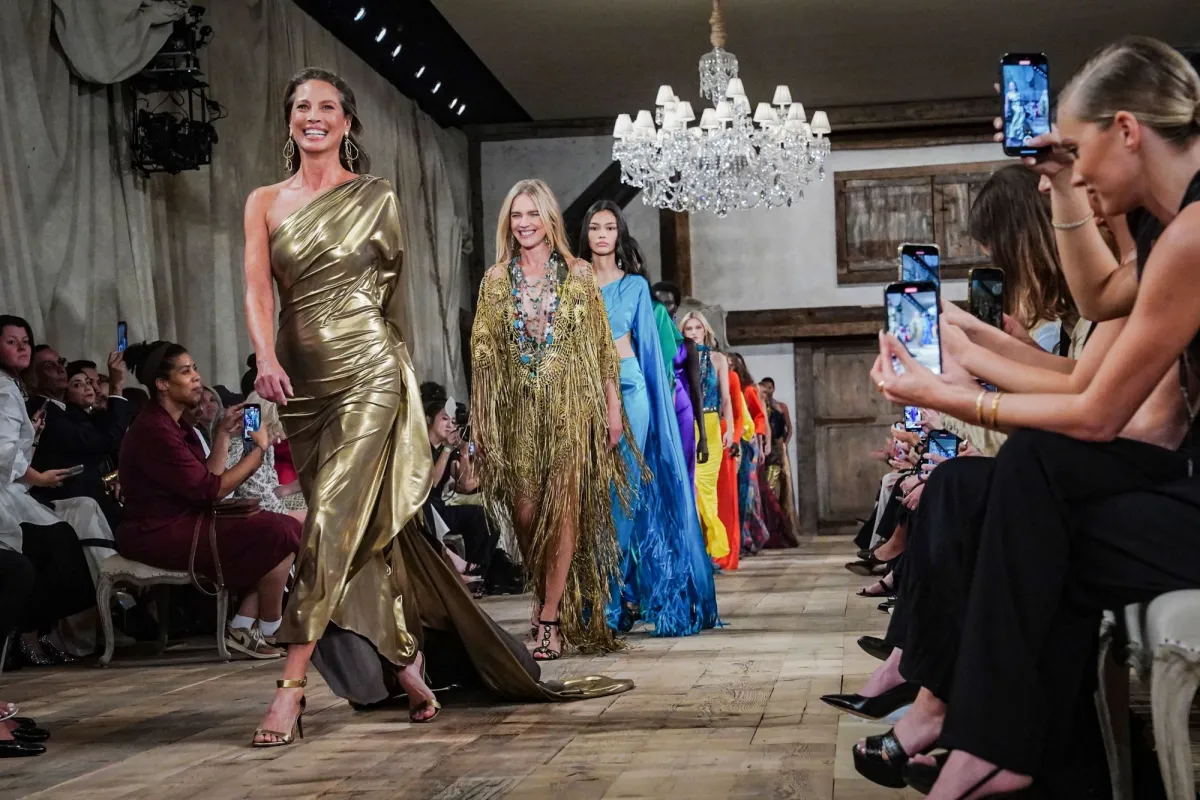 Photo: New York Fashion Week, via media.cnn.com
More recently, the Taylor Swift and Scooter Braun saga demonstrated how a genuine dispute can be amplified to operatic proportions through strategic social media deployment — with Swift's Tumblr posts, Braun's supporters' responses, and a cascade of celebrity takes all functioning as individual chapters in a story that kept the internet occupied for years. Whatever the underlying reality, the narrative was managed with precision.
The Publicist's Fingerprints Are Everywhere
Industry insiders — again, speaking with the anonymity that lets them actually be honest — describe a sliding scale of feud authenticity. At one end: genuine bad blood that gets carefully managed into something more press-friendly. At the other: entirely constructed tension between two acts whose teams have identified that a rivalry narrative will move product for both of them simultaneously. Most feuds, they say, live somewhere in the middle.
'The best fake feud is one where both parties have genuine feelings about each other but those feelings are about 20 percent as intense as the coverage suggests,' one veteran entertainment publicist reportedly told a podcast earlier this year. 'You're not manufacturing emotion from nothing. You're just... turning up the volume.'
The tabloid side of the equation is equally knowing. Editors at major celebrity weeklies have acknowledged — in industry panels, in memoirs, in retirement interviews — that 'sources close to' items are often exactly as sourced as they sound: one person, possibly tangentially connected to the celebrity in question, offering a perspective that conveniently serves a narrative someone wanted told.
The Fans Are Running Forensics
Here's the twist that nobody in the industry fully anticipated: the audience got smart. Extremely smart. And they brought spreadsheets.
Fan communities on Reddit, TikTok, and X have developed sophisticated frameworks for identifying manufactured feuds in real time. They track the timing of 'beef' stories relative to project release dates. They note when both parties in a supposed rivalry happen to have something to promote in the same news cycle. They screenshot the moments when supposed enemies are photographed laughing at the same party — often the same week the tabloid beef is running hottest.
The Selena Gomez and Hailey Bieber situation generated entire investigative threads from fan accounts cataloguing exactly which incidents were organic and which appeared to be amplified by interested parties. The level of analysis would not be out of place in a journalism school.
'At this point the stans are better at media literacy than the media,' one entertainment journalist noted on X, with what appeared to be genuine resignation.
So Does It Still Work?
Somewhat paradoxically: yes. Even audiences who know the game is rigged keep watching. The awareness that a feud might be manufactured doesn't fully defuse its entertainment value — if anything, the meta-layer of trying to figure out what's real adds another dimension of engagement. You're not just watching the beef. You're watching the beef and trying to reverse-engineer the publicity strategy behind it. That's two shows for the price of one.
Which is, when you think about it, exactly what the publicists were hoping for.
The next time your favorite celebrities are at each other's throats on social media, remember: somewhere, their teams are probably in the same group chat.