All Rise — and Bring Your Agent: The Booming Business of Celebrities Getting Paid to Show Up in Court
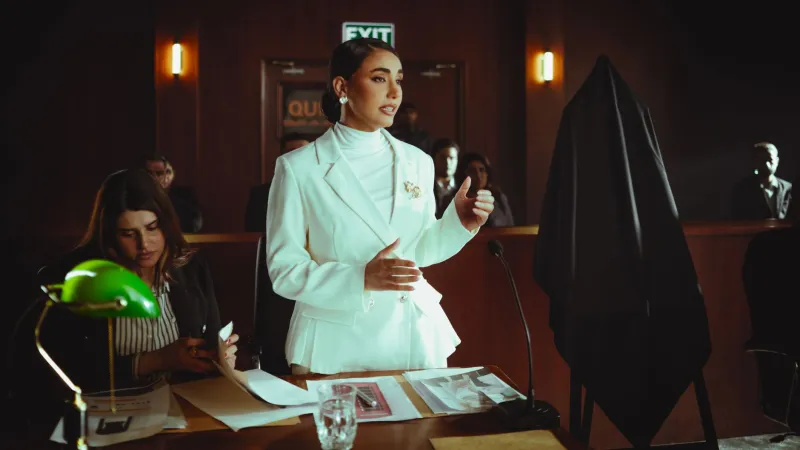
The expert witness takes the stand. They're poised, well-dressed, and radiating a kind of authority that's hard to quantify but impossible to ignore. The jury leans forward. The opposing counsel looks mildly annoyed. And somewhere in the gallery, a very satisfied attorney is mentally calculating whether the $50,000 appearance fee was worth it.
Welcome to one of Hollywood's most quietly lucrative side hustles: the celebrity courtroom cameo.
It doesn't get the press coverage of a movie deal or a brand partnership. There's no Instagram post, no red carpet, no carefully curated announcement. But across the American legal system — in civil suits, brand damage cases, defamation trials, and the occasional high-profile criminal proceeding — a growing number of famous faces are showing up in court, lending their names and their notoriety to whoever's cutting the check. And the checks, by all accounts, are very, very good.
How the Hustle Actually Works
Let's be clear about what we're talking about, because "celebrity in court" can mean several different things, and the distinctions matter.
The most straightforward version is the character witness — someone who knows the defendant personally and testifies about their good character. This is the version most people are familiar with, and it's the one that occasionally makes news when a famous name shows up to vouch for someone. Character witnesses aren't typically paid for their testimony (that would raise serious ethical flags), but their presence can be part of a broader legal strategy that involves plenty of paid consulting work around the margins.
More lucrative — and more interesting — is the expert witness category. This is where the real money lives. An expert witness is retained specifically because of their professional knowledge in a relevant field, and they are absolutely, unambiguously paid for their time. A former professional athlete retained to testify about the economic value of an athlete's brand. A retired network executive brought in to explain how a scandal affects a talent's market value. A onetime reality TV producer called to contextualize how editing choices affect public perception. These are real, documented roles in real legal proceedings, and the fees can run from tens of thousands to hundreds of thousands of dollars depending on the case's complexity and the celebrity's name recognition.
Then there's the brand damage consultant — a category that's grown significantly in the social media era. As more lawsuits involve claims about reputational harm, defamation, or the economic impact of a public scandal, attorneys are increasingly looking for witnesses who can speak credibly about how fame works, how public perception is built and destroyed, and what a damaged reputation actually costs in dollar terms. Who better to explain that than someone who's lived it?
The Names You Might Not Expect
The celebrity expert witness world operates with a discretion that would make most publicists envious — participants rarely advertise their involvement, and court filings can be dense enough that the famous names buried in them don't always surface in entertainment coverage. But they're there.
Retired athletes have long been a staple of sports-adjacent litigation. Former NFL players have appeared as expert witnesses in cases involving sports marketing contracts, concussion liability, and athlete endorsement disputes. The logic is straightforward: who better to explain the economic ecosystem of professional sports than someone who navigated it at the highest level?
The reality TV world has generated its own cottage industry. Former producers, contestants, and network executives have been called in cases involving contract disputes, defamation claims arising from show edits, and — increasingly — the mental health impact of reality show participation. As lawsuits against production companies have become more common, the pool of potential expert witnesses with direct, relevant experience has grown accordingly.
Perhaps most fascinatingly, the defamation boom of the last decade — turbocharged by the Depp v. Heard trial's massive public footprint — has created demand for witnesses who can speak to the mechanics of public reputation. How does a celebrity's social media following translate to economic value? What does a viral scandal actually cost in lost endorsements? These are questions that entertainment industry veterans are uniquely positioned to answer, and attorneys are paying for that positioning.
 Photo: Depp v. Heard, via is1-ssl.mzstatic.com
Does It Actually Work?
This is the question that legal observers seem most divided on, and the answer — unsatisfying as it is — appears to be: sometimes.
"Juries are people," says one civil litigation attorney who has worked on high-profile entertainment industry cases, speaking generally about the use of celebrity-adjacent witnesses. "They respond to credibility and relatability. A well-chosen expert witness who happens to be recognizable can absolutely help — but a poorly chosen one can backfire spectacularly if the opposing counsel makes them look like they're just there for the check."
That last point is the central vulnerability of the whole enterprise. Cross-examination of paid expert witnesses almost always includes pointed questions about their fee — how much they're being paid, how many times they've testified for plaintiffs versus defendants, whether their opinion might be shaped by the size of the check. For a civilian expert, this is uncomfortable. For a celebrity whose financial situation is already a matter of public record and tabloid speculation, it can be genuinely damaging to their credibility on the stand.
The Depp v. Heard civil trial — which played out in extraordinary detail on social media in 2022 — offered a masterclass in how expert witness credibility can become a battleground. Both sides retained high-profile experts whose qualifications, fees, and conclusions were picked apart not just by opposing counsel but by millions of armchair legal analysts watching the livestream. The court of public opinion rendered its own verdicts on the experts almost as quickly as they rendered them on the principals.
The Ethics Question Nobody Wants to Answer
The paid expert witness system — celebrity or otherwise — operates in a space that legal ethicists have long found uncomfortable. The concern isn't that experts get paid; that's standard and disclosed. The concern is that the adversarial system creates incentives for experts to shade their opinions toward whoever retained them, and that celebrity names can lend an unearned gloss of authority to testimony that a jury might not be equipped to critically evaluate.
For celebrity witnesses specifically, there's an additional wrinkle: the fame itself can be a distraction. A juror who's starstruck — or, alternatively, who actively dislikes the celebrity in question — may be processing the testimony through a lens that has nothing to do with its actual merit. Attorneys who use celebrity experts are essentially making a calculated bet that the name recognition works in their favor. Sometimes it does. Sometimes it very much does not.
The Market Is Only Growing
None of this is slowing the trend down. If anything, the expansion of high-profile civil litigation — particularly in the entertainment, sports, and technology sectors — has created more demand for expert voices with genuine industry credibility. And for celebrities whose peak earning years are behind them, or whose primary career has hit a slow patch, the courtroom offers something genuinely appealing: a professional venue where their experience has direct, compensable value.
It's not glamorous, exactly. There's no premiere, no after-party, no stylist. But the check clears, the work is real, and — unlike a brand deal or a reality show appearance — nobody can accuse you of selling out. You're just telling the truth. Professionally. For a very healthy fee.
The red carpet may be the most famous runway in Hollywood — but right now, the most profitable walk might be the one from the witness room to the stand.